Marketing
This idea, extended for later-stage startups On Gumroad — freeThe simple sounding way to share it is
- Research about customer needs, problems, views
- Segmentation and the aim to target most likely to benefit segment
The above two are not steps but co-existing thinking patterns
- As an outcome we have the design of products and messaging
Once we have a product, and strategy for sales and marketing
- We can use our messaging, test channels, improve approach
Social media is the last front, scale every time to 10M views
- Consistently fast execution through rapid scripting and bringing trust
I have found doing this extremely difficult, not easy at all
Young Entrepreneur
You are a new entrepreneur who recently passed out. It is likely you know why will customers choose you. Let's not research, customers will be converted once a product is build and understand what we offer. We will make profits, and pump money in ads, we will take care of marketing at it goes.
(content later)
Purpose Hierarchy
You may be selling to only Google as a customer, you may be selling to billions of users, or you may be selling to a hundred thousand law firms. They are to be researched, and will ask you your purpose of research. It is rarely clear what you want to learn, so you have to create a document through self awareness about your assumptions. See to it, that you keep clearing your assumptions but also find hidden assumptions, behind known assumptions, and create purpose on the fly as you talk with people. Come back with the views people shared, and apply them to your idea. Stick to your idea longer than you might assume, even if your idea is challenged or rejected. Learning is important, because that will help you generate a better idea. Go through techniques the world uses to design products, apply them on your idea when in the context of other people's views, and learn.
Purpose Hierarchy is an experienced entrepreneurs diagram that is a blueprint of navigating conversations. It is based on winning and losing criteria, where to focus when an anticipated event comes up, what to learn from events that rarely come up but need to be pierced into. Basically faster insights with an open mind. It also helps you stay focused when conversations sway sideways, and gives you direction when conversations become silent.
First in Line Research-Design in Marketing
A feedback process on ideas turned into views that takes logic and preparation and understanding, emotional engagement, organisation and observing organisation, and repeated efforts over new found insights.You have ideas which become views while communicating. These are formed every time you think. They need feedback to become relevant. You start the research process with untested ideas, and you end the research process with strong applicable ones. The process of research is a skill, that doesn't mean you can't gain from delving in conversations with consumers if you aren't skilled. But, to compete at larger scale, which you would want to, you need to look into your process of research as well.
One other thing research requires, is emotional engagement, and with many people. Introverts like me can do only few such engagements per day, others might do it all day. Researching people requires appreciation of their ideas and viewpoints. And they may not align with your research goals. It's emotionally done and there is no other way around it.
The third thing required is organisation and observing organisation. You need to be organised as you are talking to so many people, there is no set way or one single piece of software, that perfectly organises this research. Observing organisation is a process in organisation where you start to see themes and patterns in the dump of research you have. Thus organisation is research dependent, and not method dependent. The research tells you how to organise things.
The last part is generating insights. The process above will yield insights when you distinguish one thing from another. Not all insights are relevant, and you will apply your mind to decide that. Then you will find few ideas, that are relevant to your project, and input that back into further people you research. Design will be still a different part of the entire process of idea development. But some design thinking will be necessary to move forward your research.
It takes time, it's a process, and nothing is perfect.
Messaging Litmus Test
How strong and necessary is your repeatability that it goes unquestioned every-time you narrate to a singular new person in the presence of all the old persons?
What is the relation and commonality between the old and next new people, that the old come to see their reaction on your narration of the message?
(content later)
Two types of segmentation
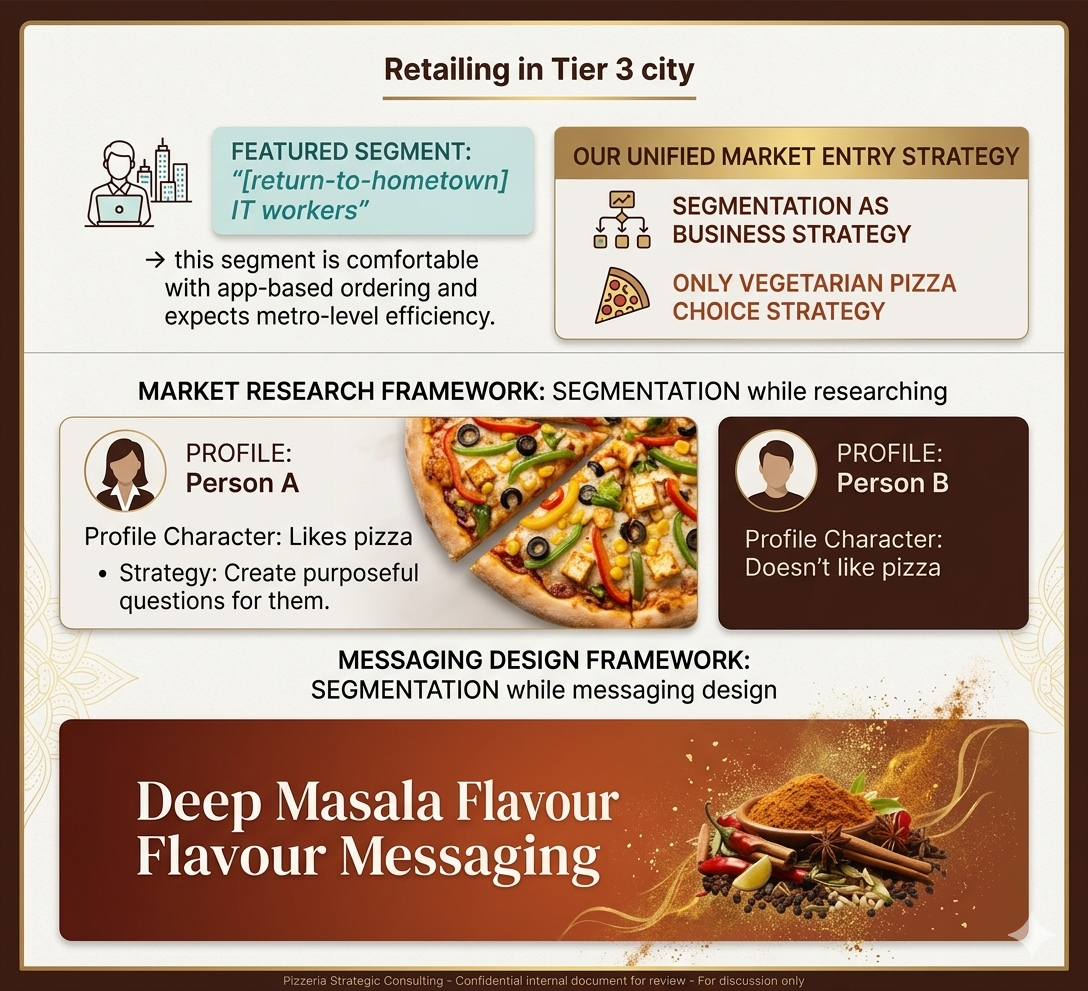
You do segmentation while researching to build "understanding", and you do segmentation while strategising to "win". Responders to research will be varied, there is need to manage that. You put different opinions in different baskets i.e. segmentation. This type of segmentation can be very specific and granular, because you are focusing on minute differences, in order to resemble the world "as it is".
The other type of segmentation happens when you are deciding where to compete, and put limited resources into. You make your own definition of what segments should be and they are broader and least granular, because all the differences in people need not be considered. The market "as is" is known through research, now you are designing "we see" about the market. You will target many different people, together as a segment, on differences that matter most to consumers when purchasing the category your product belongs to.
Every difference found in research, can be dealt with by extracting commonality.
While you are always trying your best to be aware of differences and changing differences in the market at a granular level, you will not pick those granular differences as targeting criteria. This is because you will be targeting bigger groups of people, based on commonality while differences exist.
Through research you might be able to pick what the granular differences are, but you don't know who all in the big world is carrying those differences, you cannot identify who is whom. Though technology has made it possible to reach people more granularly too.
Now the other aspect on relying on broader segmentation is that people are not just very different, they want to belong in groups. They want to see brands working not just for individuals but the communities they belong to. And thus there is still much need to market more broadly. This is a powerful area to consider when marketing. Your messages and interpretation of the world is capable of moving people to action collectively. I hope you delve in it a bit.
Strategy
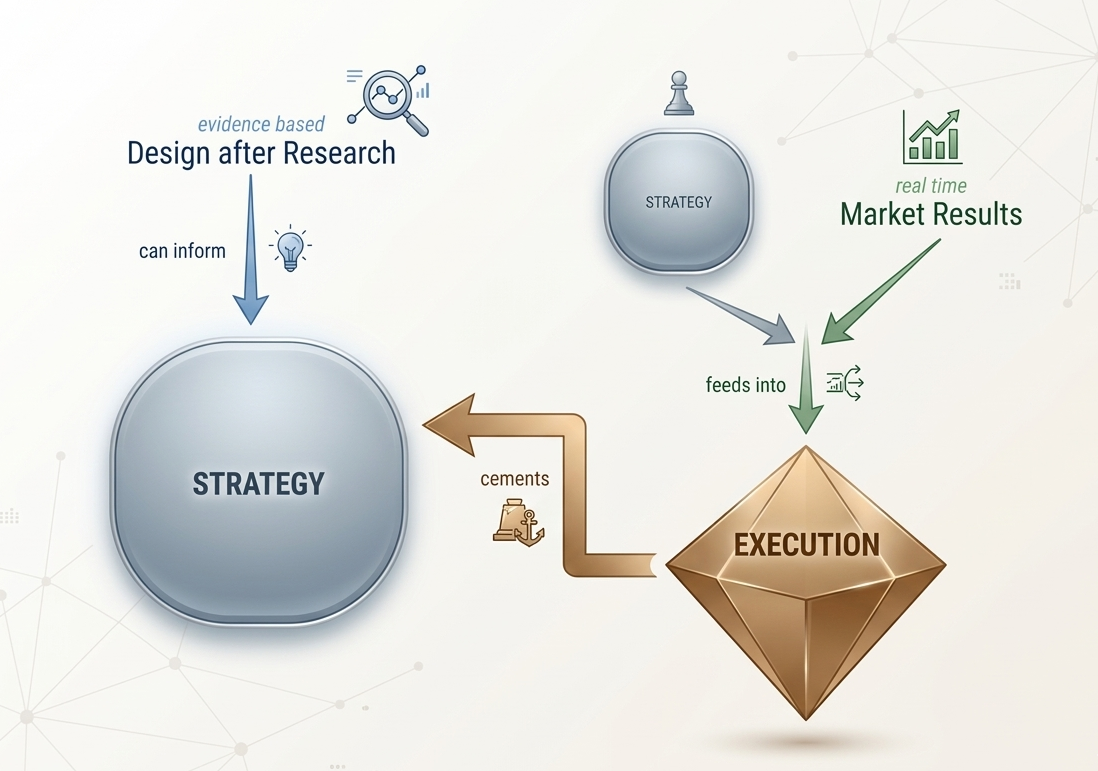
Strategy is clearly not possible unless some things begin to work in the market that gives clues on our offering's gravity. Once we know our pull, we can try to increase it. And that is strategy.
(content later)
Marketing Execution Objectives or Marketing Objectives
Marketing may have objectives tied to current offerings, or may seek new markets and offerings, they maybe even broader objectives. The type of objectives that support current offerings are being called Marketing Execution Objectives here. Even if the word "execution" is not included assume this section to talk about objectives for ready and current offerings.
Marketing Execution objectives are different from business objectives. Marketing E. Objectives supports business goals, yes, but also it's own goals. Conversion is the biggest objective, but everything cannot be seen from the lens of conversion, as everybody is not in the market to buy when you are marketing. You will see objectives that may matter to conversion, may be directly tied to conversion or may be loosely tied to conversion.
(content later)
Trust Immersion and Useful Identity
(content later)
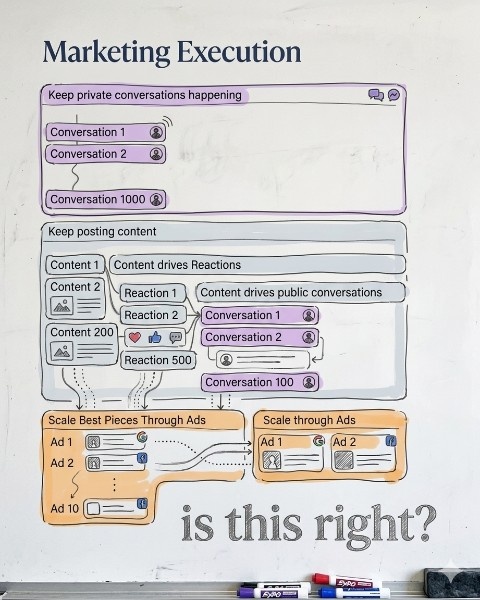
Basically there are two parts to channel ownership - immersion and identity. Immersion means how well camouflaged are you to feel part of the platform, and Identity means the degree of relevant attractiveness you manage to create from similar firms. Many creators and startups forget to be part of the platform, or do not ensure relevant attractiveness. This leads to desperate purview of the brand, not well received. People have fleeting attention, they want the difference you provide, but zero desperation from you for it.
This is better done per channel, and not as a connected experience across multiple channels. It can match, but not be connected. Because mediums and their channels attract different people when in different motivations. You see Apple just have 0 tweets on X because it has no strategy for it. It doesn't attempt to do anything, which is fine and you can act similarly when you don't have a huge team. If you can't camouflage, and be competitively attractive, you won't build trust in your activity, hence don't do it, choose 1 channel first.
Social Scale costs Less and Less
The more you are trusted and accepted (i.e.Trust Immersion and Useful Identity) the more your bank profits from you. Thus scaling ROI is certain by depending on smart agencies who have it as their job to study virality.
Scaling only works once you are trusted and have an identity. You may have medium level of trust, then you should try to scale at a medium level. And not overdo it, hence wasting money. Those who will see you as trustable, will convert, other's not so much. It's best to work first on the previous step and do this step as it improves. If you are very well trusted, you can scale at bigger lapses in other criteria people use before buying. Social Metrics like followers, likes and shares can be very powerful.
Early Growth through Tactical Strategy
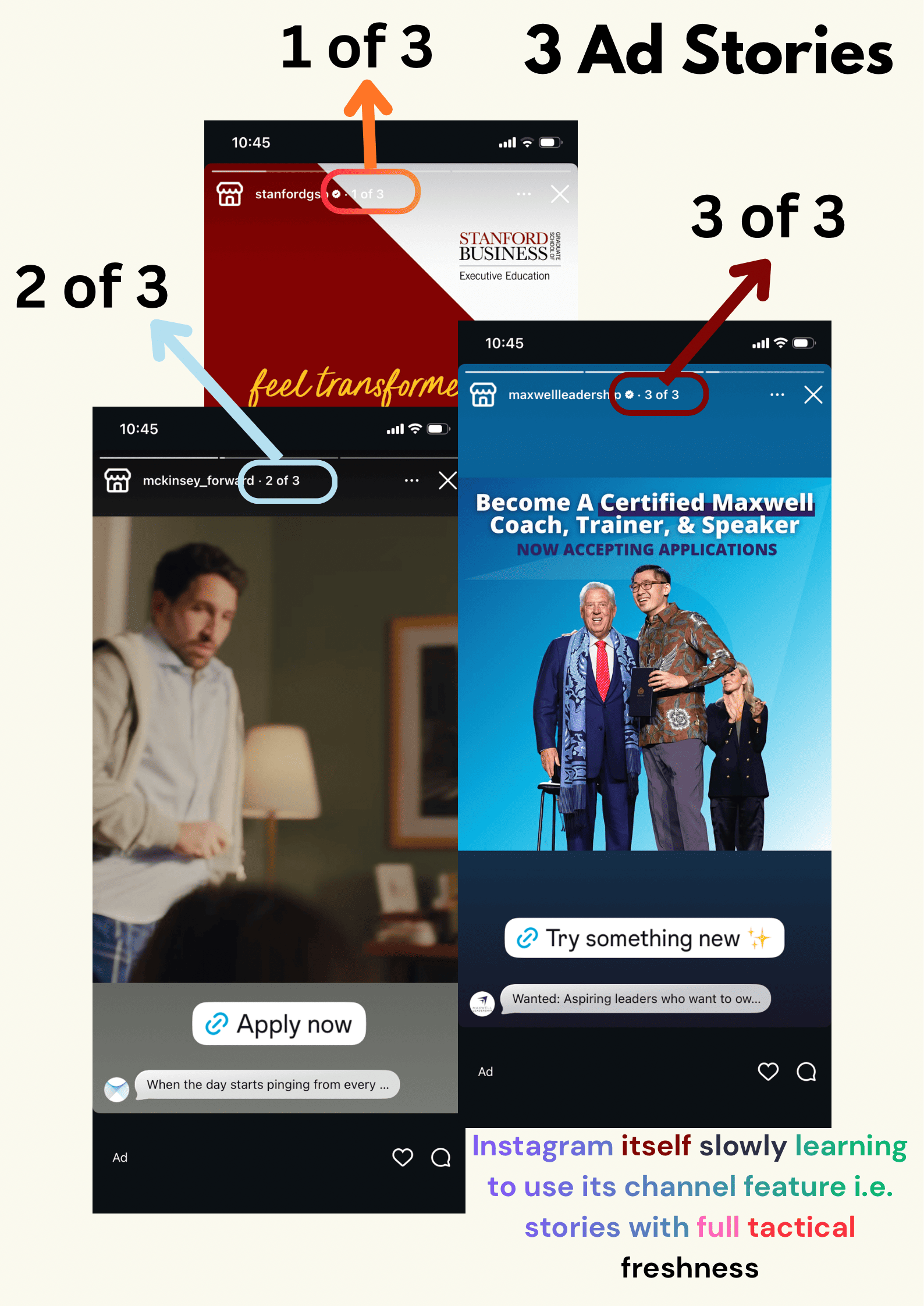
One goal of strategy is to use tactics, and coordinate them. These tactics need to be current, while the conceptual utilisation is aged. With strategy, you can achieve your goals. And these goals are present on different channels. You start with modifying one.
The tactics are part of strategy, because they define it by how you implement them. A use of a channel to it's fullest creates symphony on other internet accentuated channels. The tactics you implemented on one, create expectation or familiarity wanted on another. See we haven't discussed tactics here and thus this is strategic.

Marketing Assets and Copy
In practice, envision interests as required by differences in people. Interest defines what you say, and messaging constraints that. But, you need to prioritise repeated highlighting of messages by making a list of what's more important.
Techniques to Convert Interest to Copy
-
Funnel Tastes and Variations ➡️ You will spend a lot of time analyzing customers
For Customers -
Human Psychology and Equivalents ➡️ This is not a distinct set from funnels and resides in it as well, but broader interests outside the funnel can be inspired from here
For Customers and Informers -
World Affairs and Trends ➡️ Especially important in tweets, posts, stories on social media
For Audiences -
Anything broader ➡️ Used by some brands, they talk about everything
For the World -
Special focus on product ➡️ Though the funnel covers this, sometimes there is dedicated emphasis on just the product
For Experts
quick eg. Paid Colab between Mr. Beast (interest of people) and Salesforce (constraint on Mr. Beasts promotion)